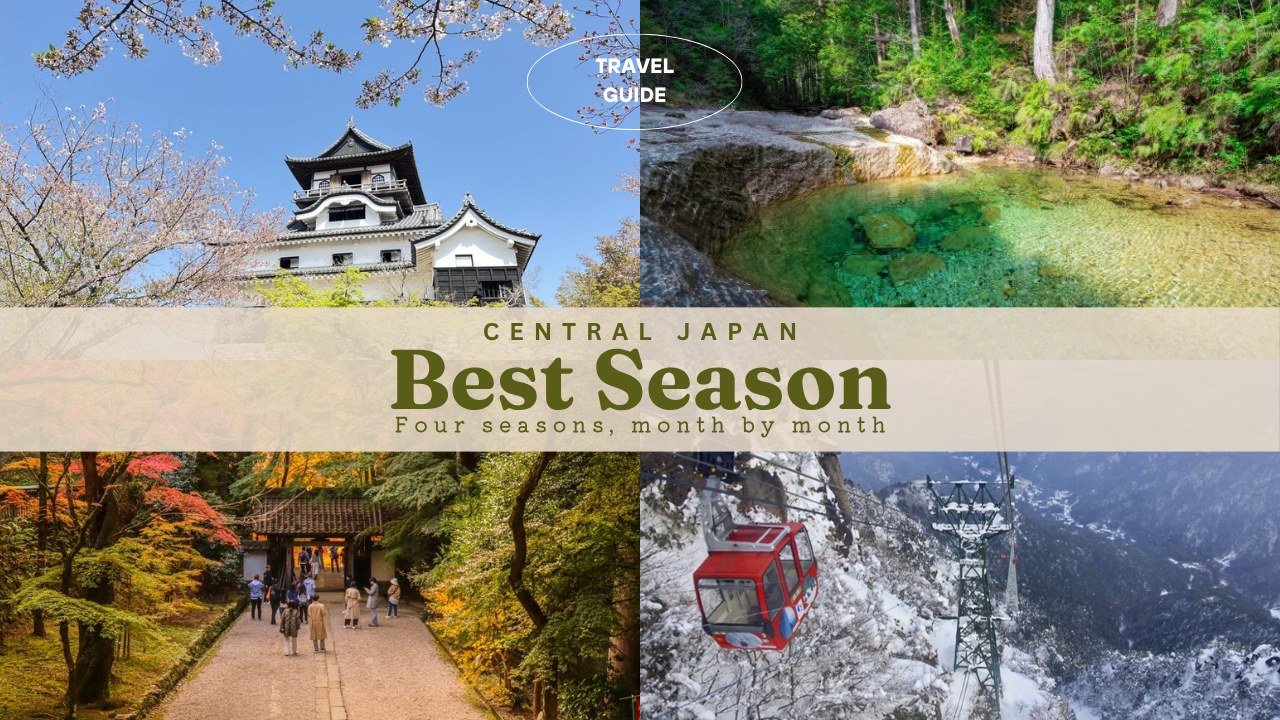
When's the best time to visit central Japan? A month-by-month guide to weather and what to pack
By Trip Japan YLP Editorial TeamPublished by Trip Japan YLP
In this article
"When's the best time to visit Japan?" is probably the question we hear most. And honestly, there's no single right answer — it depends on what you want out of the trip. But if you're heading to central Japan, our corner of the country (Aichi, Gifu and Mie, gathered around Nagoya), the seasons here have such a strong personality that I can at least tell you what each month actually feels like, and what to throw in your suitcase.
So here's the honest, month-by-month version.
The short answer: the best months to visit central Japan
If you want easy weather, come in spring or autumn. Late March into April, and again from late October through November, the air is mild, the rain eases off, and the region puts on its best colours — cherry blossoms in spring, fiery maples in autumn. Those are the postcard months.
But "best" really depends on what you're chasing. Summer is loud, green and full of festivals (and hot). Winter trades the crowds for snow-buried mountain villages. There's no bad time; there's only the time that suits you. Let me walk you through it.
(If you're still fuzzy on what counts as "central Japan", we untangled that in what the Tokai region actually is.)
Spring (March–May): cherry blossoms and the kindest weather
This is many people's favourite, and it's easy to see why. In Nagoya the cherry blossoms usually open around March 20 and hit full bloom near the end of the month — the 2026 forecast points to roughly March 28–30. Daytime highs climb from the low teens in March to the low twenties by May (about 14°C up to 24°C), with crisp mornings.
What to wear: layers. A light jacket or sweater you can peel off as the afternoon warms, plus something warmer for evenings — especially up in the Gifu mountains, where spring arrives later.
June: the rainy season nobody warns you about (but should)
June is when tsuyu, the rainy season, settles in. In 2026 it arrived on June 7, and it usually lifts around July 19. Expect humid, drizzly stretches; Nagoya collects roughly 185mm of rain across the month, and highs sit in the high twenties.
Here's the thing, though: we genuinely love June, and we made the whole case for it in why the rainy season is our little secret. The gardens turn impossibly green, the crowds thin out, and the hydrangeas come into their own — like the 50,000 of them that glow after dark at Katahara Onsen, an hour from Nagoya.
What to wear: breathable clothes, a compact umbrella (every konbini sells them), and shoes you don't mind getting wet.
July and August: high summer, and hotter than you think
Let me be straight with you, because guests are so often surprised: central Japan in midsummer is hot. Properly hot. Nagoya is one of Japan's warmest big cities — August highs average around 33°C, and on the worst day on record the city hit 40.3°C (back in August 2018). It's the humidity that really gets you.
So we wrote a whole survival guide: how the locals keep cool. The short version — handheld fans, cold drinks from the konbini, and ducking into air-conditioned department stores. But summer also owns the best nights: river festivals, fireworks, and the 1,300-year-old spectacle of cormorant fishing on the Nagara River. And if Mt. Fuji is on your list, July and August are the only months it's open — though the rules changed in 2026, so read up before you go.
What to wear: the lightest, most breathable clothes you own. A hat, sunglasses, a water bottle. Don't overthink looking polished — survival first.
Autumn (September–November): the other best season
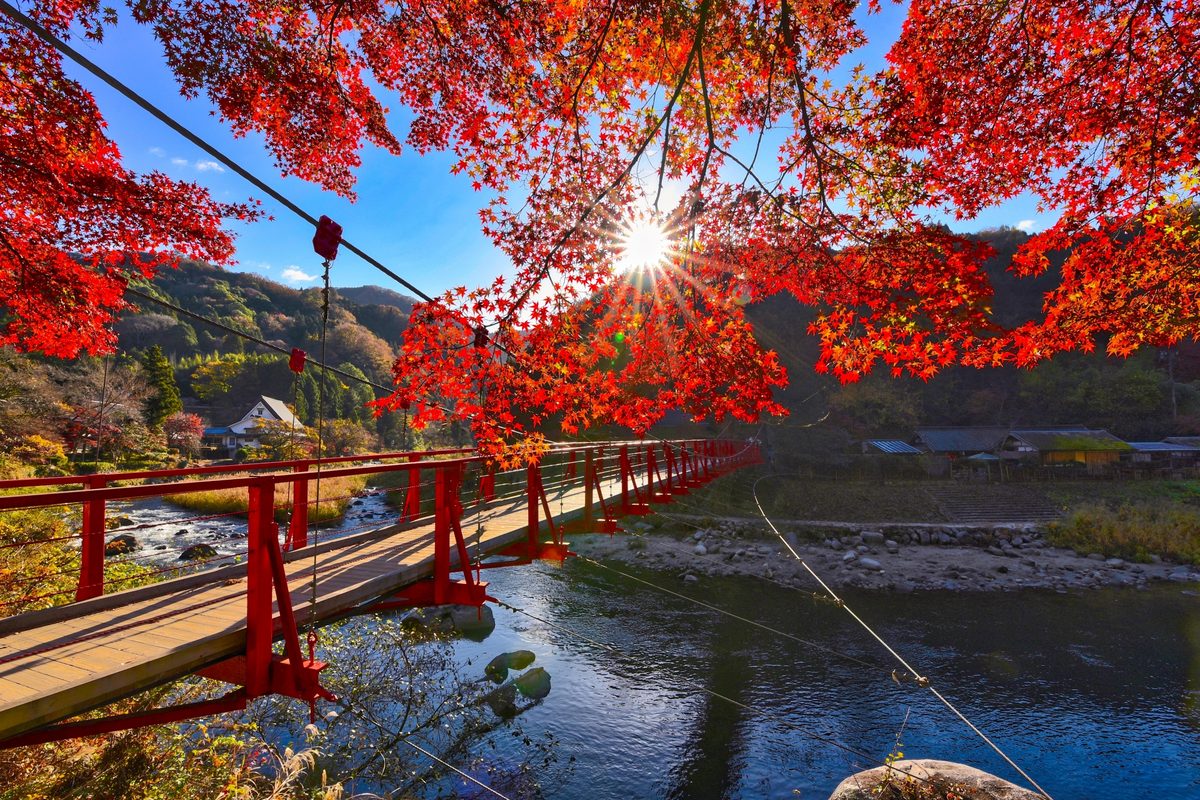
September is still warm and, fair warning, the wettest month of all (around 230mm — it's typhoon season, so keep an eye on the forecast). But push on into late October and November and you reach what I'd argue is the loveliest stretch of the year. The weather in November is mild and clear — Nagoya highs around 17°C, cool mornings — and the maples turn. Korankei, an hour from the city, sets some 4,000 maple trees ablaze and usually peaks around the third week of November.
What to wear: that layered spring kit again — a jacket, a sweater, a scarf for the mountain mornings in Takayama and the Kiso valley, which colour up earlier (late October).
Winter (December–February): snow country, minus the crowds
Down in Nagoya, winter is cold but dry and sunny — highs around 9–11°C, lows near freezing, not much snow. Head north into Gifu, though, and you step into a different country. Shirakawa-go and Takayama sit under deep snow from December to February, with temperatures dropping to around −5°C. On a handful of evenings each winter, the thatched farmhouses of Shirakawa-go are lit up against the snow — in 2026, on January 12, 18, 25 and February 1 (you'll need to reserve).
What to wear: a proper winter coat, gloves, a hat, and waterproof boots with grip if you're heading up to the snow. In the city, a warm coat is plenty.
So, what's the best time to visit central Japan?
If you want my honest pick: late March to mid-April for the blossoms, or November for the maples — that's when the weather is gentlest and the region is at its most beautiful. But come in June and you'll have the green to yourself; come in summer for the festivals; come in winter for the snow. Each season tells a different story about the same place.
Whenever you land, pack for the month — and come say hello. We'll be here, fan in one hand in August, umbrella up in June, watching the seasons turn.
Planning a trip around central Japan? See the small-group days we run from Nagoya.
Browse all toursDid you enjoy this story?