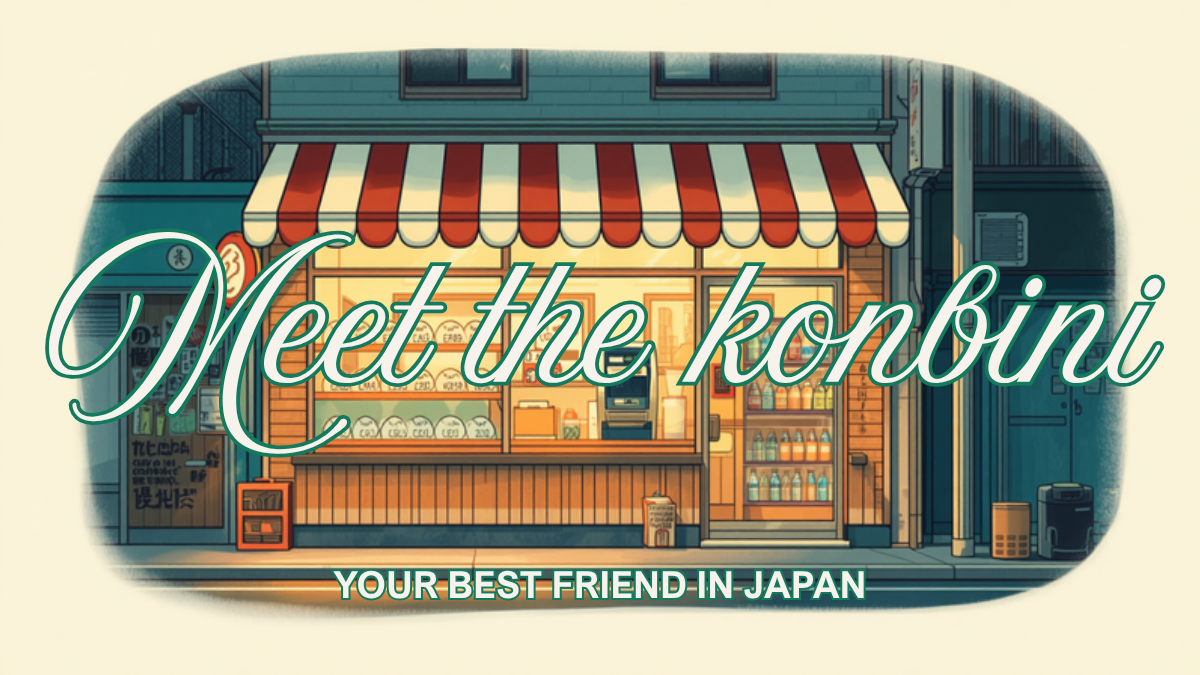
Meet the konbini: why a Japanese convenience store might be your best travel friend
By Trip Japan YLP Editorial TeamPublished by Trip Japan YLP
In this article
It's late. You've just stepped off a train in a town whose name you can't quite pronounce, your phone is at twelve percent, you're hungry, and you're nearly out of cash. Back home that might be a small crisis. In Japan, you just look for a glowing sign — 7-Eleven, FamilyMart, Lawson — and walk in. Problem solved. Usually all of them at once.
We call them konbini (short for "convenience"), and there are more than 55,000 across the country as of 2025. For a lot of the guests we show around central Japan, the humble Japanese convenience store quietly turns out to be the most useful building in the country. So here's what one can actually do for you, beyond selling you a drink.
The cash machine that takes your foreign card
Japan still runs on cash more than most visitors expect, and this is where the konbini earns its keep first. Inside almost every 7-Eleven is a Seven Bank ATM — over 28,000 of them nationwide — and unlike a lot of Japanese bank machines, these actually accept foreign cards: Visa, Mastercard, UnionPay, JCB and more. They run 24 hours, and the screen switches into ten languages, Vietnamese and English among them. Landed at midnight with an empty wallet? You're two minutes from having yen in your hand.
Food that's genuinely good — not just "fine for a convenience store"
Here's the part that surprises people. Konbini food is properly good. Made fresh, restocked around the clock, and mostly a few hundred yen.
Start with an onigiri, a rice ball wrapped in seaweed. Pull the little tab and the nori folds itself around the rice, still crisp — a small, brilliant piece of engineering. Then work outward: FamilyMart's FamiChiki (a hot, juicy slab of fried chicken by the register), Lawson's bite-sized Karaage-kun, 7-Eleven's oddly beloved egg sandwich. In the cold months there's oden simmering by the till and steamed pork buns in a warmer. Buy a cup noodle and you'll find a kettle and a microwave, and usually a little counter to stand and eat at.
The quiet superpowers
This is the stuff most visitors never discover.
You can send your suitcase ahead. Hand it over the counter at a 7-Eleven or FamilyMart, and Yamato's takkyubin service delivers it to your next hotel — often next day, up to 25kg, paid in cash or by card. Then you ride the train with just a day bag instead of wrestling a suitcase up the station stairs. Honestly, it's a game-changer.
You can also top up your IC card (Suica, ICOCA, or Nagoya's own manaca) with cash at the counter, buy tickets from the in-store kiosk for buses, concerts and attractions — LEGOLAND Japan among them — pay a utility bill, and use a clean, free toilet. That last one matters more than it sounds: bins are rare on Japanese streets, so the konbini rubbish bin and restroom are a small daily gift.
One gentle bit of etiquette: eat at the counter or take it with you rather than wandering off eating as you walk, and drop your rubbish in the store's own bin, not a random one.
And out in the countryside — the quiet corners of Gifu and Mie we love sending people to — that glowing konbini sign at the edge of a sleeping town is sometimes the only thing open for miles. A hot coffee, a clean loo, cash, a rice ball, a friendly "irasshaimase." When you're far from home, those small things add up to a lot.
So don't skip them as "just a convenience store." Walk in. It might be the most Japanese five minutes of your day.
Planning a trip around central Japan? See the small-group days we run from Nagoya.
Browse all toursDid you enjoy this story?