Where Japanese tea comes from: a small tour of the tea country
By Trip Japan YLP Editorial TeamPublished by Trip Japan YLP
In this article
Here's something that took me a while to notice. Two cups of Japanese green tea, both just "sencha" on the label, can taste like quite different drinks. One is soft and sweet, the other brisk and almost bracing. A lot of that difference isn't the brand at all. It's the place.
Japan grows tea from the warm south all the way up to the edge of where the plant can survive the winter, and every region has its own character — its own soil, its own hills, its own way of doing things. So let me take you on a little tour. Not a ranking, just a map of who grows what, and why it tastes the way it does.
If you're new to all this, our earlier notes on the story of Japanese tea and why sencha and matcha are so different are a nice place to start. This one is about the where.
Shizuoka: the big one
If Japanese tea had a heartland, it would be Shizuoka. For as long as most people can remember it has grown more tea than anywhere else in the country, in a wide sweep of hills between Mount Fuji and the sea. When you picture neat green rows climbing a slope with Fuji floating behind them, you're picturing Shizuoka.
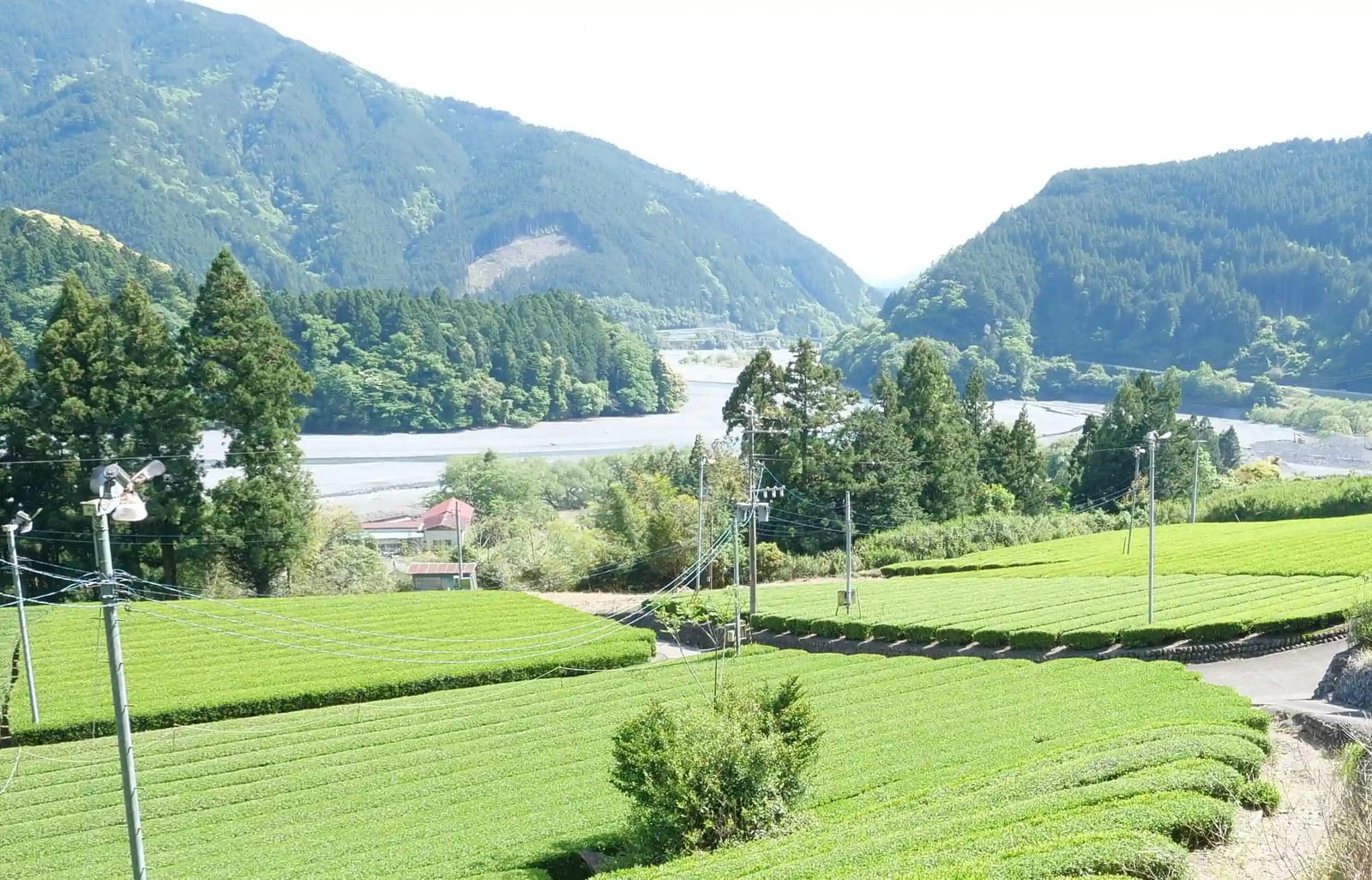
It's not one flavour, though. Down on the flat, sunny plateau of Makinohara you get big, everyday sencha. But climb up the river valleys into the mountains — places like Kawane, deep in the folds of the Oi River — and the tea changes. Cooler air, morning mist, steep little terraces tended by hand. The leaves come out gentler and more aromatic, the kind of tea people save for a quiet afternoon. Same prefecture, completely different cup.
Kyoto and Uji: the old master
If Shizuoka is where most tea comes from, Uji, just south of Kyoto, is where the fancy stuff was more or less invented. This is old ground. Uji has been growing tea for centuries, and it's the home of the shaded-tea techniques that give us matcha and gyokuro — leaves grown under cover for a few weeks before picking, which turns them deep green and sweet and takes the edge off the bitterness.
You taste history here. A good Uji gyokuro is a slow, almost broth-like thing, nothing like a quick morning cup. It's not cheap, and it's not meant to be gulped. If you ever get the chance to sit down with one properly, take it.
Nishio: the matcha town near us
This one is close to home. Nishio, over in our own Aichi, is one of Japan's great matcha towns — quietly, without much fuss. The tea gardens sit along the Yahagi River, and a big share of the everyday matcha that ends up whisked into lattes, folded into sweets, or dusted over ice cream comes from around here.
I like Nishio precisely because it isn't famous the way Uji is. You can be standing in matcha country without a tour bus in sight. If you're spending time in central Japan and you like the green stuff, it's worth knowing the ceremonial powder in your cup might have grown a short drive from Nagoya.
Kagoshima: the fast riser
Down at the southern end of Kyushu, Kagoshima has quietly become one of the biggest tea producers in the whole country. Because it's warm down there, the season starts early — Kagoshima's new tea is often the first to reach the shops each year, weeks ahead of the cooler regions.
It's modern tea country: wide, flat fields built for machines, a lot of it grown to a reliable, easy-drinking style. If you've had a smooth, deep-green everyday sencha lately, there's a fair chance it started life in Kagoshima.
Sayama and beyond: tea at the cold edge
Head north instead, up near Tokyo in Saitama, and you reach Sayama — about as far north as tea comfortably grows. The plants have to tough out real winters here, and the old saying goes that Sayama tea wins on flavour: fewer harvests, but a thick, rich cup, helped along by a local finishing-roast the growers are proud of.
There are more, of course — Mie with its shaded kabuse-cha, Fukuoka's Yame gyokuro, little pockets all over the country. That's part of the fun. Once you start noticing where a tea is from, the label stops being one word and starts being a place.
So which one should you drink?
Honestly? All of them, over time. That's the nicest way to learn. Next time you buy tea in Japan, turn the bag over and look for the region — Shizuoka, Uji, Nishio, Kagoshima, Sayama — and drink it knowing a little about the hills it came from. And if you want to line them up by season, which tea suits which month is a good next read, or peek at how the leaf actually becomes tea.
We're based in Nagoya, so we've got a soft spot for Nishio — but we'll happily drink our way around the whole map. See you out there, cup in hand.
Planning a trip around central Japan? See the small-group days we run from Nagoya.
Browse all toursDid you enjoy this story?