How to stay safe in a Japanese summer — reading the heat before it reads you
By Trip Japan YLP Editorial TeamPublished by Trip Japan YLP
In this article
We've already written about the tricks locals use to keep cool in a central Japan summer — the handheld fans, the konbini ice packs, the shaded "cool breaks" in the middle of the day. If you haven't read how the locals keep cool, start there; this is the companion piece.
Because there's keeping cool, and then there's staying safe. Those aren't quite the same thing, and in a Japanese summer the gap between them matters. Every year, people here — locals and visitors alike — end up unwell in the heat, and almost always it starts small, with a sign that was easy to wave off. So this one is about listening to your body a little earlier than feels necessary.
The early signs, and why they're sneaky
Heatstroke doesn't usually announce itself. It creeps. The first hints are the kind you'd normally shrug off on a busy sightseeing day: a dull headache, a bit of dizziness when you stand, feeling faintly sick, muscles that cramp for no reason, sweating buckets — or, oddly, sweating stopping altogether. None of these on their own means disaster. But together, or getting worse, they're your body asking for a pause.
Here's the honest bit: on holiday, you're the most likely to ignore all of it. You've come a long way, the castle's right there, you don't want to waste the afternoon. That's exactly the mindset the heat takes advantage of. If you or someone you're travelling with starts feeling off — foggy, wobbly, queasy — treat it as the signal, not a nuisance. Get into shade or air conditioning, sit down, drink, cool your neck. If it doesn't ease, or someone seems confused or can't keep water down, don't tough it out — reach out to local emergency services or a medical facility. We're a travel team, not doctors, and neither of us should be guessing when it comes to this.
The one number worth watching: WBGT
Japan runs a national heat-alert system every summer, and it's genuinely useful once you know what it's telling you. It's built on something called WBGT — a heat-stress index that folds in humidity and sunshine, not just the air temperature. That's the key, because in Nagoya it's the humidity that gets you: a 33-degree afternoon here feels far heavier than 33 dry degrees somewhere else, and WBGT is the number that actually reflects how the day will land on your body.
When the forecast index runs high, a Heatstroke Alert (熱中症警戒アラート) goes out — the evening before and again early that morning. On the rare, most extreme days there's a stronger "special" alert on top. For 2026 the system runs from late April through the 21st of October. You can check it as an English-friendly map at wbgt.env.go.jp. An alert day doesn't mean cancel everything; it means plan the day with the heat in mind.
Water, salt, shade, rest — in that spirit
You already know to drink water. The part people forget is salt: sweat a lot and plain water alone isn't quite enough, which is why you'll see locals reaching for salt tablets, salted candies, or the pale-blue sports drinks and oral-rehydration drinks in every konbini fridge. Sip before you're thirsty, not after.
The rest is rhythm. A cold bottle pressed to your neck or wrists is a genuine reset. A cooling body sheet from a drugstore buys you twenty comfortable minutes. And the single most effective move is the least dramatic one: step indoors. Nagoya makes this easy — covered arcades, department stores, a café, a museum — so build a proper air-conditioned break into the hottest stretch of the day rather than pushing through it.
Let the timetable do some of the work
The simplest safety measure isn't a gadget, it's the shape of your day. The sun is fiercest from roughly late morning to mid-afternoon, so that's the window to be somewhere cool on purpose. See the outdoor sights early or in the softer evening light, and slot something indoors — or genuinely cooler — into the middle.
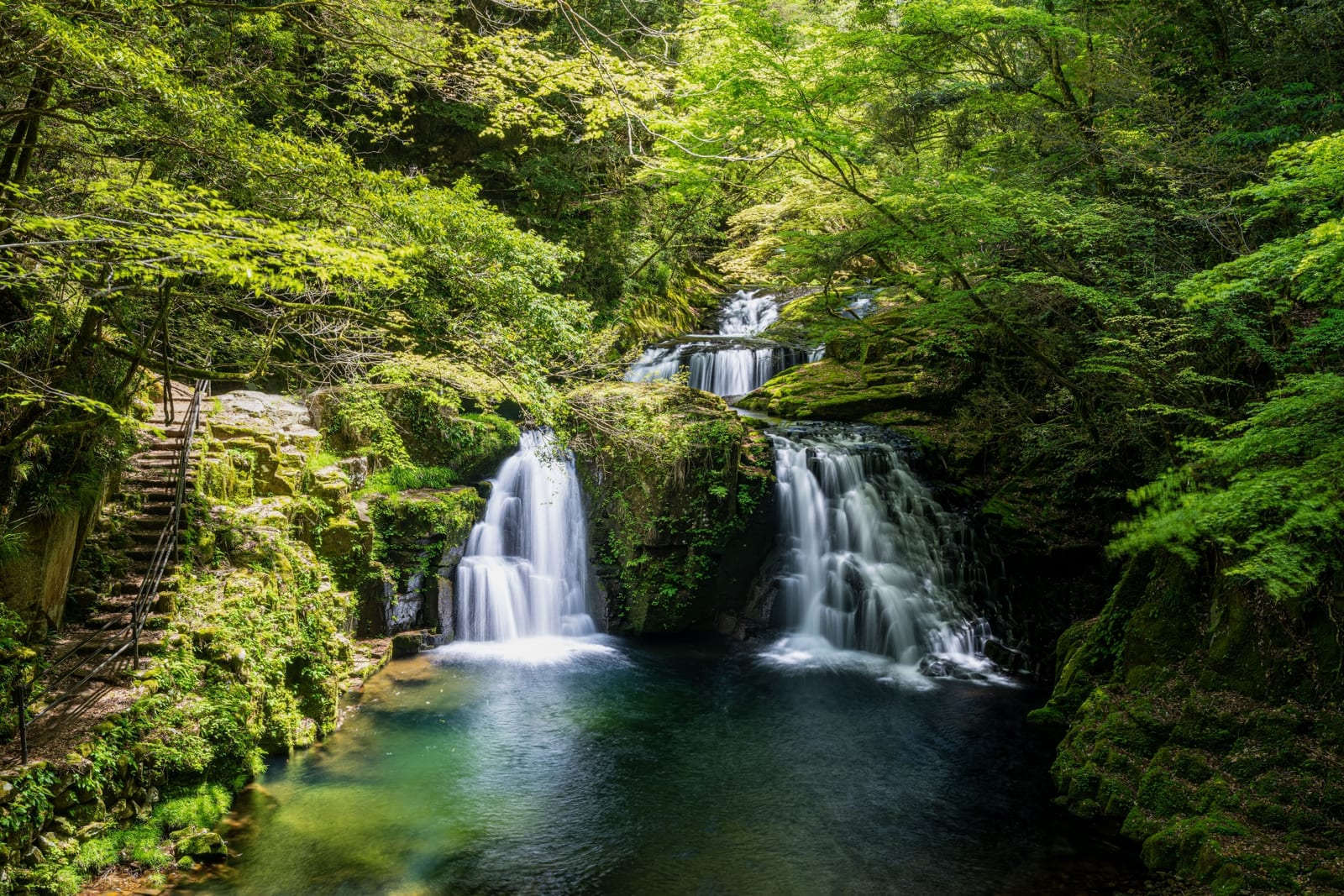
Central Japan is good for that last one. An hour or so from the city there are places the heat barely reaches: the shaded ravine and waterfalls of Akame's 48 Falls, the mountaintop air up the Gozaisho Ropeway where it runs cooler than the valley, or the quiet green gorge at Chiiwa. For a wider look at what each month actually feels like, our seasons guide lays it out; if your dates land in June, the secret of the rainy season is worth a read; and once the evenings cool, the summer festivals are the reward for pacing yourself all day.
None of this should make a Japanese summer sound frightening. It isn't. Travel with the heat instead of against it — water within reach, an eye on how you feel, the middle of the day spent somewhere cool — and you'll barely think about it. Take it slow, listen to your body a beat sooner than you think you need to, and we'll happily plan a day that keeps you in the cool when it counts. Look after yourself out there.
Planning a trip around central Japan? See the small-group days we run from Nagoya.
Browse all toursDid you enjoy this story?